
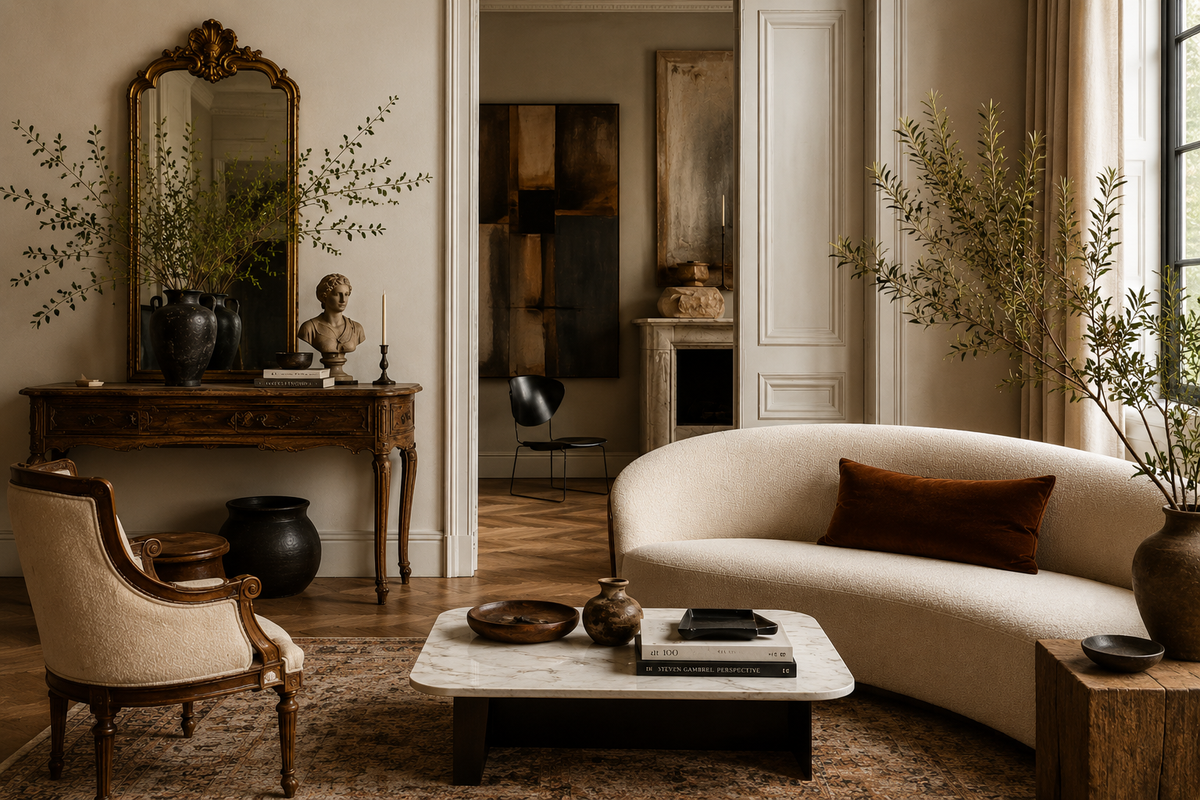
Rooms that combine vintage and modern pieces can feel current without losing their history. The contrast gives each element more presence and allows the home to feel personal rather than tied to one period.
Mixing the two styles can seem difficult at first, but a clear starting point makes it easier. An antique cabinet can sit in a clean-lined room, just as sculptural modern lighting can work in a traditional setting.
Establishing a Clear Sense of Balance
A mixed-style interior needs a clear balance so that one style does not overpower the other. Begin by deciding which direction should lead the space:
- A modern-led interior starts with a clean, minimal base and adds selected vintage accents such as antique rugs, retro artwork, or mid-century seating.
- A vintage-led interior starts with older furniture or architectural features, then adds modern elements such as streamlined lighting or restrained metallic finishes.
Defining a dominant style helps maintain cohesion and prevents the design from feeling scattered.
Developing a Cohesive Colour Palette
Colour and texture help different eras sit together. A limited palette creates a connection between pieces, while varied textures keep the room from feeling flat.
Colour is one of the most effective ways to connect vintage and contemporary pieces. Use a consistent palette so contrasting styles can sit comfortably together:
- Neutral foundations: begin with white, grey, or beige. These adaptable tones create a calm backdrop for vintage features and modern furnishings.
- Accent colours: introduce colour through cushions, throws, or artwork.
- Era-specific hues: use colours associated with a period, such as mustard yellow for a mid-century influence or soft pastel pink for a 1950s reference.
Consistency is key. Allow colours to flow naturally between rooms so that the overall home feels connected, even if individual spaces lean more towards one style.
Creating Connection Between Elements
A room feels connected when its pieces share something: a material, colour, shape, or finish. Vintage and modern elements can be linked through:
- Repetition, such as echoing wood tones or materials across different pieces
- Contrast, for example pairing a sleek contemporary sofa with an ornate antique mirror
- Complementary textures, balancing soft fabrics like velvet with smooth surfaces such as glass or steel
These relationships make the mix feel deliberate.
Adding Depth Through Texture
Texture adds visual and tactile variation. Combine the warmth of vintage finishes with the cleaner surfaces of modern materials.
- Contrasting soft and solid elements: combine velvet seating or traditional woven rugs with glass, marble, or polished stone. Differences in texture and finish help each element stand out.
- Organic materials: use wood, leather, or stone to ground the interior.
- Metallic accents: use brass or copper to support the vintage elements, with chrome or stainless steel adding a contemporary contrast.
Blending Eras with Care and Restraint
When combining different periods, it is important to avoid overcomplicating the design. Too many competing styles can make a space feel chaotic.
Instead, focus on a few complementary eras. For instance, mid-century furniture pairs naturally with Art Deco accents, while industrial lighting can enhance more traditional architectural settings.
Mixing old and new works through contrast. Clean contemporary lines bring the craftsmanship of antique pieces into focus. Reupholstering vintage furniture in a modern fabric is another way to connect the eras without losing the original character.
The styles should support one another rather than compete, so the room looks as though it has developed over time.
Layering Textiles for Warmth and Storytelling
Textiles are one of the simplest ways to bring old and new together. Fabrics add warmth and soften hard surfaces. Layering vintage and contemporary textiles connects the eras through texture, pattern, and colour. An antique tapestry or a new rug can add history and context through its material and design.
- Combine modern rugs with antique furniture: placing a contemporary rug beneath an antique table or chair changes how the older piece reads. The clean lines of the rug create a clear base and draw attention to the furniture's shape and detail.
- Mix throws and cushions: I combine vintage textiles, embroidered cushions, or woven blankets with modern seating to add texture.
- Use antique tapestries: vintage textiles can also be displayed as art, adding colour, pattern, and history.
Using Lighting to Merge Styles
Lighting is one of the most accessible ways to blend vintage and modern design. Options might include:
- Decorative fixtures with geometric forms for a refined, vintage-inspired look
- Industrial-style lighting to complement minimalist interiors
- Mid-century designs that offer a balance between retro and contemporary
With modern furnishings, vintage-inspired lighting helps connect the two styles.
Architectural Character
If your home already features original period details, make them a central part of your design. If not, you can still introduce elements that subtly reference the past:
- Ceiling Mouldings, decorative plaster cornices or exposed wooden beams can provide striking contrast when set against contemporary lighting and streamlined furniture.
- Vintage Doors, swap standard internal doors for reclaimed or antique alternatives, or update existing ones with a refinished look that captures a sense of heritage.
- Decorative Fireplaces, even if they're purely ornamental, fireplaces can serve as an eye-catching focal point, especially when styled alongside modern artwork or minimalist furnishings.
Blending vintage and modern styles can create a home that feels current without losing the history of its older pieces. Contemporary furniture brings clarity and function; vintage pieces add patina and a sense of time.
Whether you are making a small adjustment or redesigning a room, test materials and textures together and keep the combinations that feel natural.
Rooms that develop over time often feel more personal than those completed all at once. Bringing old and new together carefully allows both to have a clear role.