
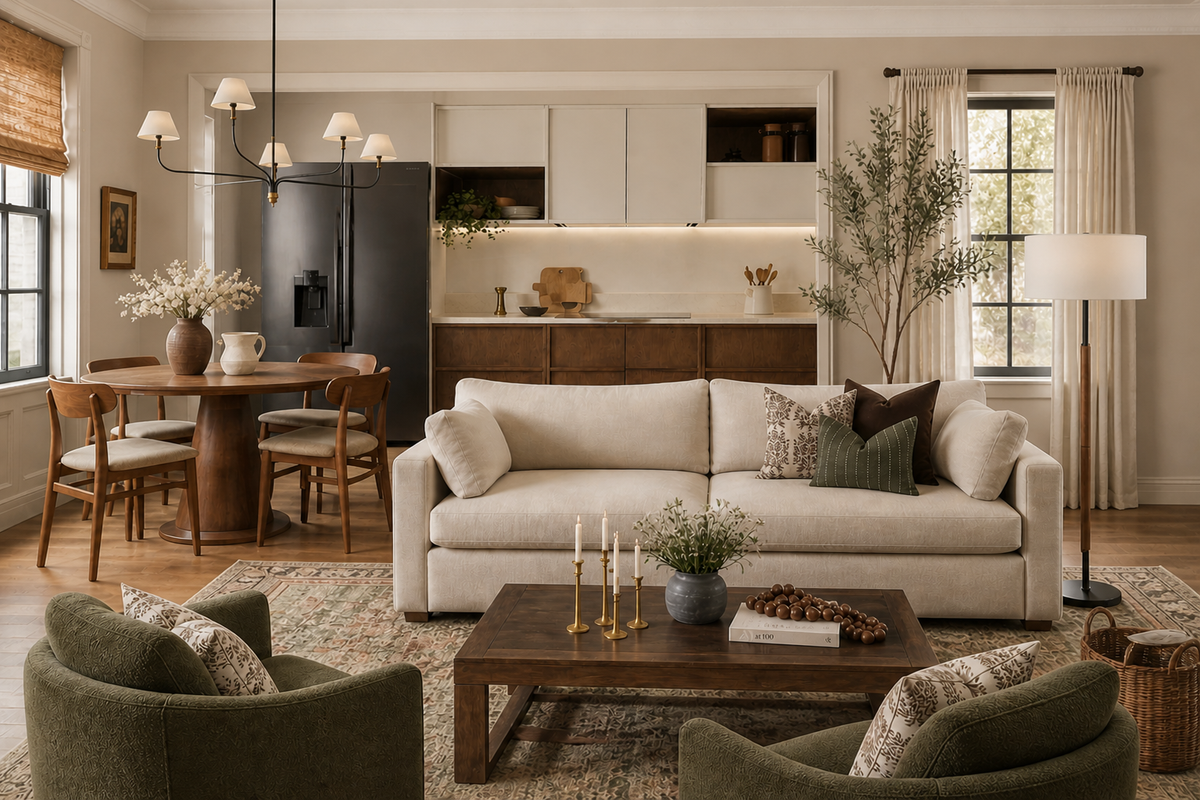
Transitional interior design blends traditional details with cleaner modern furniture, a calm palette and layered texture. It works well when you want a room to feel refined and current, but still warm and comfortable.
The style sits between traditional and contemporary design. Instead of heavy formality or stark minimalism, it uses classic architecture, soft curves, natural materials and simple silhouettes in the same room.
The aim is balance: timeless yet fresh, elegant yet comfortable, and considered without feeling overdone.
Transitional Interior Design Characteristics
The main characteristics of transitional interior design are neutral colours, layered texture, clean lines, mixed materials, classic details and modern restraint. It is a style defined by harmony and versatility rather than one fixed look.
1. Neutral Colour Palette
At the heart of transitional design is the calming, versatile use of neutral tones. Think soft whites, creamy beiges, warm taupes and gentle greys. These colours create a quiet backdrop, so furniture, artwork and decorative accents can stand out without competing for attention.
A neutral foundation also makes layering textures and finishes easier. Natural wood, woven fabrics, sleek metals and stone accents can sit together without the room feeling busy.
2. Strategic Use of Colour
While neutrals dominate, colour still has a role. Muted, nature-inspired shades work best: soft blue-grey, gentle green, sun-warmed beige or muted rust. These colours modernise traditional details without disturbing the calmness of the space.
3. Mix of Materials
Transitional design thrives on contrast. Natural materials such as wood, stone and leather can be paired with metal, glass and smoother fabrics to create interiors that feel grounded and current.
Texture matters in a neutral room. Boucle upholstery, linen drapes, velvet cushions, oak, marble and brushed metal all add depth without needing strong pattern or bright colour.
4. Clean Lines and Minimalism
Clean lines and uncluttered forms are central to transitional design. The style draws warmth and character from traditional interiors, but it also uses contemporary simplicity to keep spaces open, balanced and refined.
Lines should feel purposeful, from the curve of an armchair to the edge of a marble countertop. Repeating simple forms in furniture, architectural details and finishes helps tie the room together.
5. Layered Lighting
Lighting in transitional interiors is layered and intentional. Ambient, task and accent lighting add warmth and help show texture, architectural features and key furniture pieces.
Clean-lined chandeliers, pendant lights and sconces can introduce a more modern note, while classic table and floor lamps keep the room feeling timeless and comfortable.
Transitional vs Contemporary and Traditional Design
Traditional design usually leans into formality, symmetry, richer colours and more decorative detail. Contemporary design often feels cleaner, sharper and more current.
Transitional design sits between the two. It keeps the comfort and character of traditional interiors, but simplifies the palette, furniture shapes and overall composition. That is why it can work in older homes without making them feel dated.
Transitional Living Room Ideas
For a transitional living room, start with proportion, comfort and texture. A classic sofa shape can work with a cleaner coffee table, sculptural lighting, a simple rug and a calm colour palette.
In our transitional living room design project, rich textures, sculptural forms and warm earthy tones show how the style can feel refined without becoming formal.
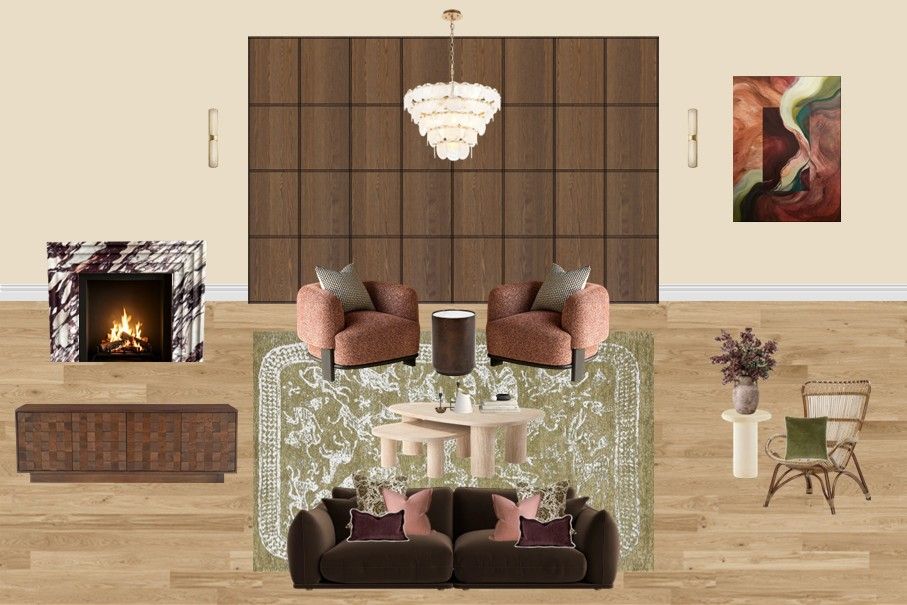
Rugs are especially useful in this style. A solid or subtly patterned rug grounds the room, unifies the palette and gives furniture a calm foundation.
How to Mix Old and New Furniture
Combining furniture from different eras is one of the simplest ways to create a transitional look. Classic forms can sit with contemporary silhouettes, as long as the scale, material and colour palette feel connected.
For example, a traditional wingback chair upholstered in a simpler fabric can work with a modern sofa. A classic dining table can be paired with streamlined chairs. The point is not to match everything, but to avoid extremes that fight each other.
Successful transitional interiors need careful editing. Choose pieces that share a subtle connection, whether through scale, proportion, material or tone. That is what makes the room feel curated rather than disjointed.
For more examples beyond the transitional style, see how I approach mixing modern and traditional interiors in period homes.
European Transitional Interior Design and Period Homes
The story of transitional design is one of evolution rather than invention. It has roots in traditional European interiors from the 1700s and 1800s, with details such as chandeliers, mouldings, patterned rugs and more formal furniture.
As minimalism and midcentury modern design challenged overly decorative spaces, designers looked for a middle ground. That balance between classic elegance and modern restraint is why transitional design works naturally in period homes.
Exposed beams, hardwood floors and detailed mouldings can provide a traditional base. Streamlined cabinetry, simpler trim, cleaner furniture and a restrained palette can then make the space feel fresher.
Transitional Bedroom Ideas
The same principles work in bedrooms. In our blue transitional master bedroom, a statement bed, deep blue tones, warm brass accents and dark walnut furniture create a more intimate version of the style.
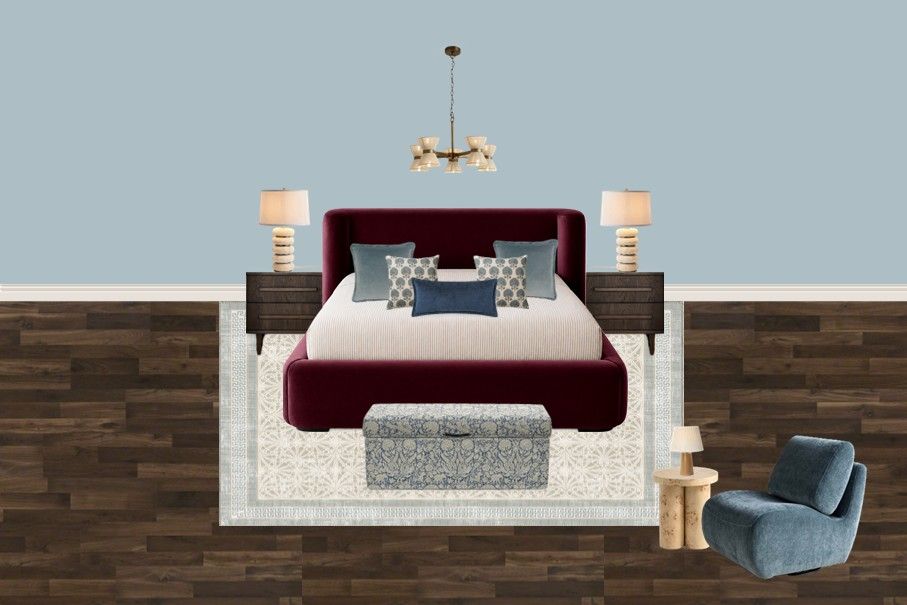
This is a good example of transitional design being flexible. It does not need to look pale or minimal. It can be richer and moodier, as long as the room still feels balanced.
Transitional design offers the best of both worlds: the elegance of tradition combined with the simplicity of modernity. Its emphasis on balance, texture and harmony makes it adaptable across living rooms, bedrooms, kitchens and full-home renovations.