
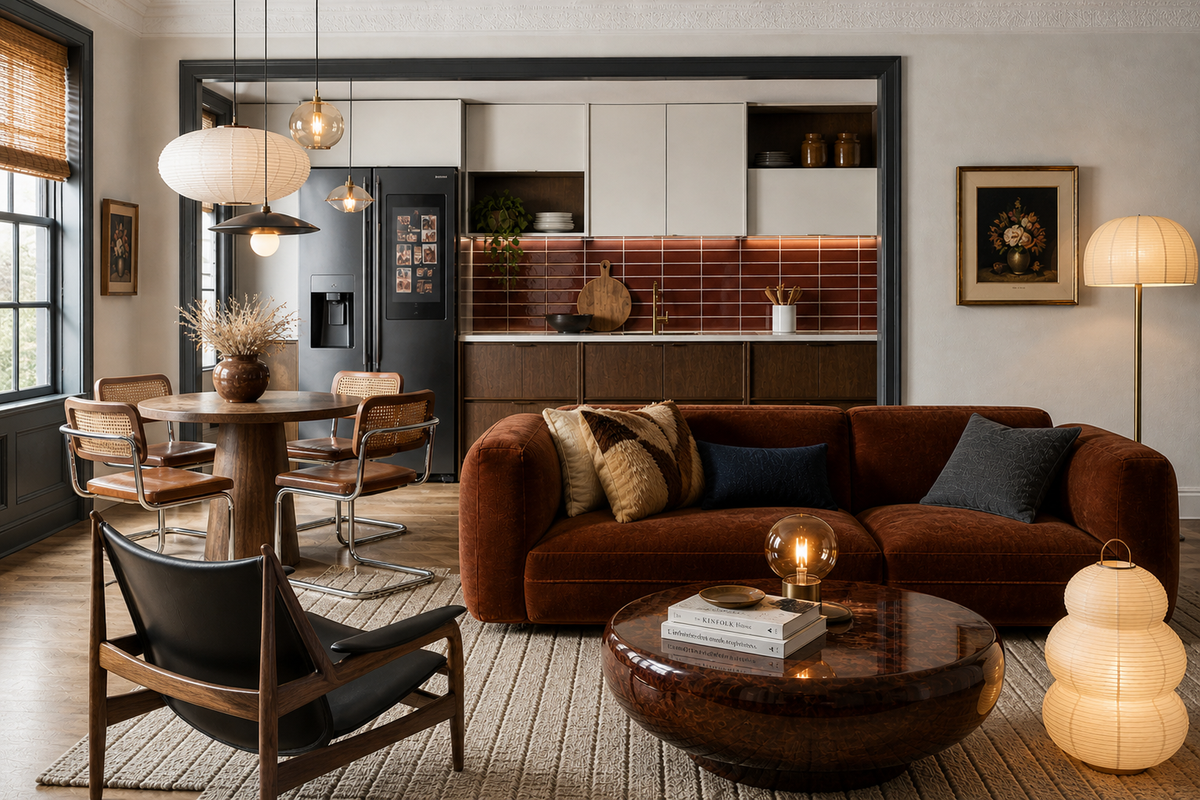
Mid-Century Modern is an enduring twentieth-century design movement. Emerging after the Second World War and continuing into the late 1970s, it changed how designers approached space, form, and function. Its influence remains visible in contemporary homes and furniture.
The style focuses on simple forms, practical furniture, and visible materials rather than ornament. Teak and walnut often provide the base, with stronger accent colours used selectively. Minimal pattern allows the furniture and architecture to remain the focus.
The Origins of Mid Century Modern Design
Mid-Century Modern developed between the 1930s and 1960s, after the more ornate Art Deco and Victorian periods. After the Second World War, homes became less formal, more connected to nature, and designed around everyday use. Architects and designers responded with uncluttered, functional spaces.
Key Characteristics of Mid-Century Modern
1. Clean, Simple Lines
Mid-Century furniture avoids unnecessary decoration and uses clear silhouettes and balanced geometry. Chairs and tables often combine gentle curves, crisp edges, and slender wooden or metal legs.
2. A Blend of Organic and Geometric Forms
Soft curves sit beside sharper geometric shapes, giving furniture a sculptural form without making it impractical.
3. Function Comes First
Each piece should have a purpose. Modular shelving, built-in storage, and multi-use furniture show how function shapes the appearance of the design.
4. Natural Materials
Teak, walnut, and oak bring warmth to the scheme. Leather, stone, and woven textiles add contrast beside metal and glass.
5. Earth Tones with Bold Accents
The colour palette combines warm natural tones such as beige, white, grey, and the rich browns of teak or walnut with mustard yellow, burnt orange, olive green, or deep blue accents.
As the style developed, designers added brighter colours such as turquoise, yellow, and blue to the neutral base. Use one or two accent shades in artwork, textiles, or a statement piece of furniture.
Mid-Century colour usually combines earthy greens, clay reds, or sea-glass blues with warm timber tones.
6. Textural Variety and Contrasting Finishes
A walnut table with metal dining chairs, or a glass top on a sculptural wooden base, shows how contrasting surfaces can work together.
Wood, leather, wool, and stone add warmth, while glass, chrome, ceramic, or velvet introduce a smoother finish. Mixing these materials connects traditional craftsmanship with the period's interest in new manufacturing.
A woven rug under a clean-lined coffee table or a velvet sofa beside a wooden credenza adds contrast without changing the overall style.
7. Iconic Furniture Forms
Several furniture forms from this period are still widely used. Common examples include:
- Lounge chairs with matching ottomans designed for both relaxation and style
- Sculptural coffee tables with organic bases
- Minimalist pedestal chairs with smooth, curved seats
- Leather and metal lounge chairs with refined silhouettes
- Dining chairs featuring distinctive split or Y-shaped backs
These forms combine function, comfort, and clear construction.
8. Bold, Sculptural Lighting
Lighting plays a key role in this design movement. Fixtures like Sputnik chandeliers, arc floor lamps, and tripod table lamps provide light while also acting as focal points.
Why Mid-Century Modern Endures
Mid-Century Modern remains relevant because it combines practical furniture with clear forms and durable materials. Individual pieces can bring warmth and structure to both small flats and larger homes.
Mid-century furniture can also sit comfortably beside pieces from other periods. My guide to eclectic interior design explains how colour, scale and materials can connect a mixed scheme.