
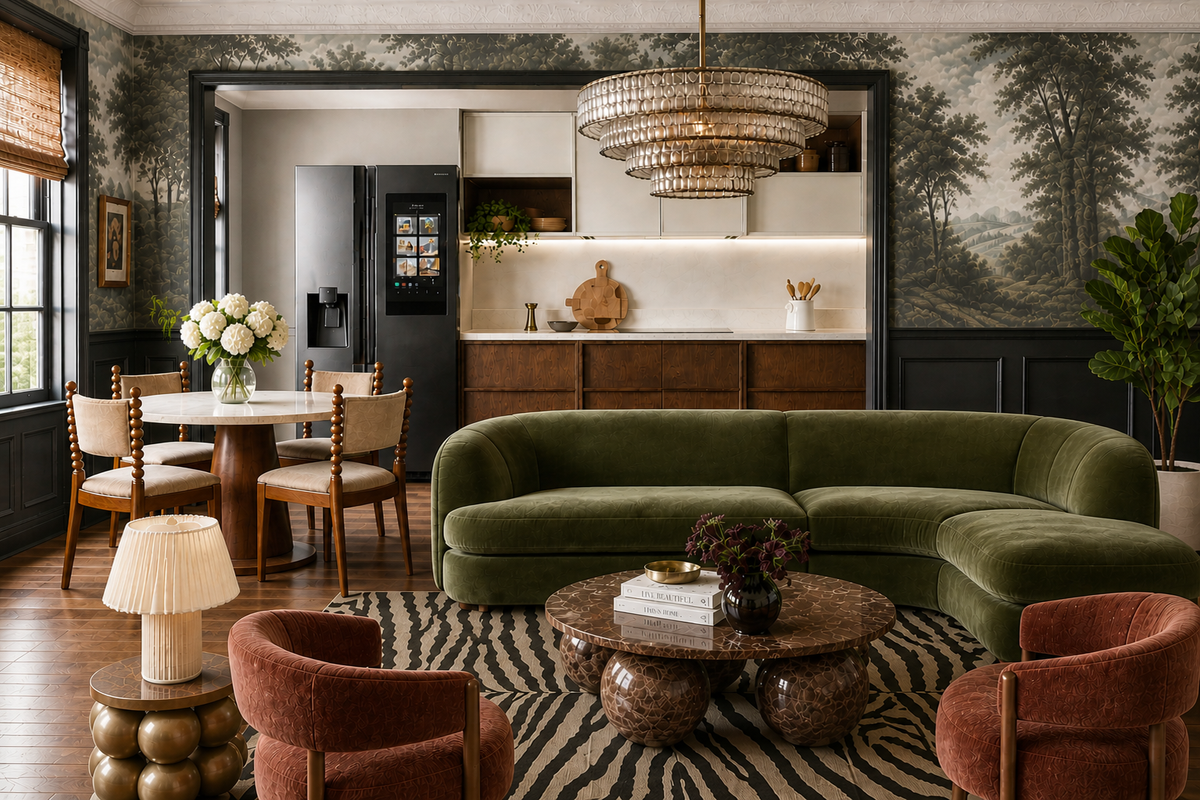
Eclectic interior design combines pieces from different styles, periods, and cultures. Contrast gives the room personality, while a few shared elements keep the mix connected.
Eclectic style follows fewer fixed rules than other decorating approaches. The aim is not to match every piece, but to connect them through colour, material, scale, or shape. A mid-century chair can sit beside a rustic farmhouse table, with modern art above an antique sideboard. The pieces differ, but the room still needs a clear visual connection.
The term “eclectic” has been used for centuries, but became associated with design in the late nineteenth and early twentieth centuries. Architects and decorators began combining influences from different movements instead of following one historical style.
Characteristics of Eclectic Style
1. A Confident Mix of Patterns
Pattern is a defining part of eclectic design. Geometric rugs can sit with floral cushions or animal prints mixed with abstract motifs.
Look for a shared colour, texture, or tone so the combination does not feel chaotic. Start with two or three patterns and vary their scale. For example, pair a large botanical print with a smaller geometric design or stripe.
Use rugs, curtains, upholstery, throws, or artwork to introduce pattern. Repeating one colour across them helps the room stay connected.
2. Global Influences
Eclectic interiors can include craft and objects from different places and traditions.
Examples include a Chinese lacquered cabinet beside Moroccan pouffes, a Persian rug beneath a Scandinavian armchair, or African woven baskets on a wall. Each piece should have enough space to be seen and understood.
Pair detailed cultural pieces with quieter furniture or backgrounds so that each one remains distinct.
3. A Blend of Old and New
Mixing old and new is one of the clearest forms of contrast in an eclectic room. A farmhouse table can sit with contemporary chairs, or a vintage mirror above a minimal console.
Pieces from different eras give a room a sense of history. Choose items that matter to you and connect them through scale, material, or colour rather than adding unrelated finds.
4. The Beauty of the Unexpected
Unexpected uses are part of an eclectic room. A vintage trunk can become a coffee table, clear acrylic stools can sit at a rustic breakfast bar, or a ladder can serve as a bookshelf.
These choices add humour and keep the room from feeling too formal or staged.
5. A Playful and Balanced Colour Palette
Colour connects patterns, textures, and materials. Start with one dominant shade, then add contrasting accents. The combination should feel energetic without becoming overwhelming.
6. Personality Above All
Personality is central to an eclectic room. Include interests, memories, and objects that have meaning, rather than choosing pieces only because they fit a theme.
That might include family photographs in vintage frames, a childhood keepsake, or textiles collected while travelling.
7. Walls That Tell a Story
Walls provide a large area for pattern, colour, and artwork, so they strongly affect the mood of an eclectic room.
Try textured wallpaper, murals, strong paint colours, or layered artwork. A botanical print repeated in the window treatment can create a deliberate connection.
A gallery wall can combine art, mirrors, and photographs in different sizes and frames. Vary the pieces but repeat one colour or finish.
Build the room around pieces you value. Avoid overcrowding, but do not edit so heavily that the room loses its personality.
Eclectic design is not an “anything goes” approach. The mix of styles, colours, and eras needs a clear connection so the room feels considered rather than random.