
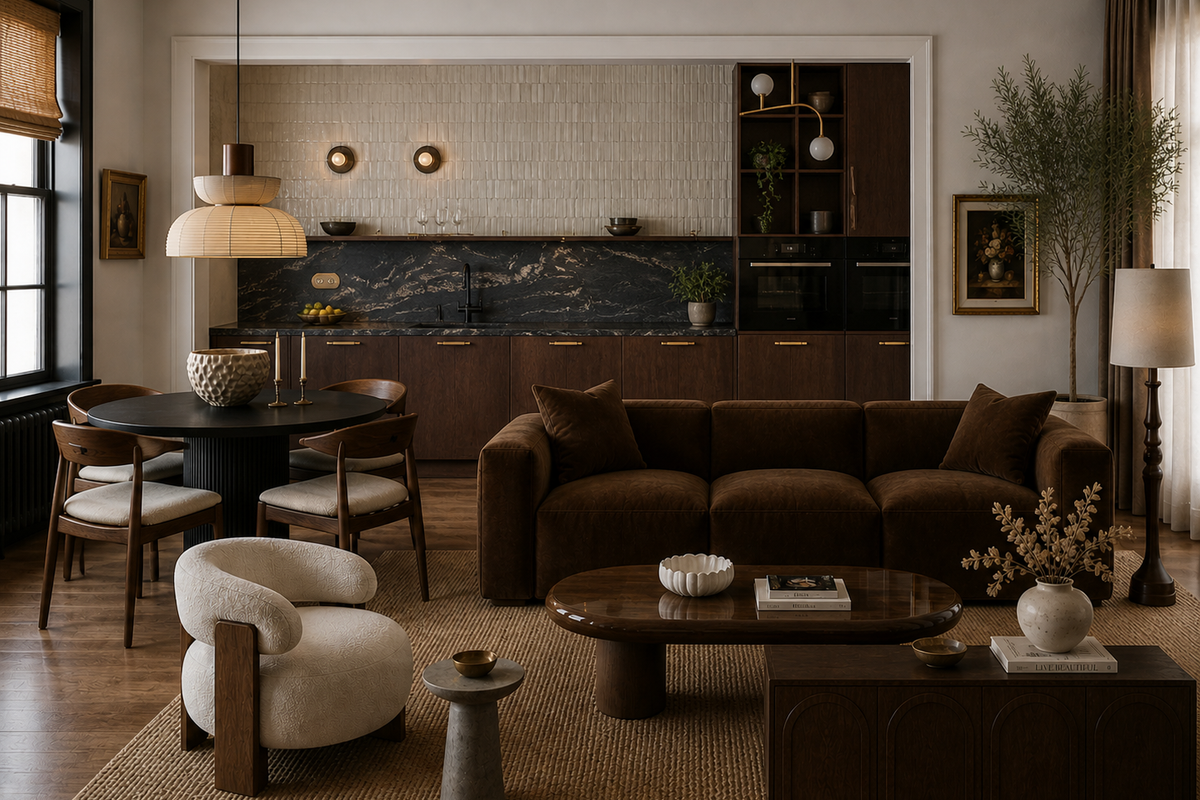
Brown is now a prominent neutral in both autumn fashion and interior design. Its depth and warmth can make a room feel richer than cooler beige or grey schemes.
Brown has moved in and out of fashion before. Its versatility made it common in late twentieth-century wardrobes, and the same quality has brought it back into living rooms, bedrooms, and kitchens.
Why Brown Feels So Comforting
We are leaning towards brown because it feels familiar and reassuring. Its connection with natural materials can help a room feel calmer and more grounded.
Brown can also feel nostalgic. It recalls old leather-bound books, handmade ceramics, café interiors, and inherited furniture, all things associated with comfort and home.
Let’s Talk About Versatility
One of brown’s strongest qualities is how easily it blends into different design aesthetics. From Mid-Century Modern to rustic farmhouse and Mediterranean Revival interiors, brown works across very different styles. Dark espresso tones with brass create a more formal scheme, while caramel, beige, and natural linen feel softer and more relaxed.
It’s also a perfect match for the emerging cafécore trend, recreating the cosy feel of a favourite coffee shop at home. It also works with Japandi style, where natural finishes and a neutral palette shine.
Light oak with crisp white creates a fresh farmhouse feel, while mahogany with forest green, navy, or warm neutrals produces a richer, cosier room.
Lighter browns such as taupe, beige, and camel add warmth without making a compact room feel closed in. Deeper shades such as chocolate, walnut, and espresso have more visual weight and suit larger or more formal rooms.
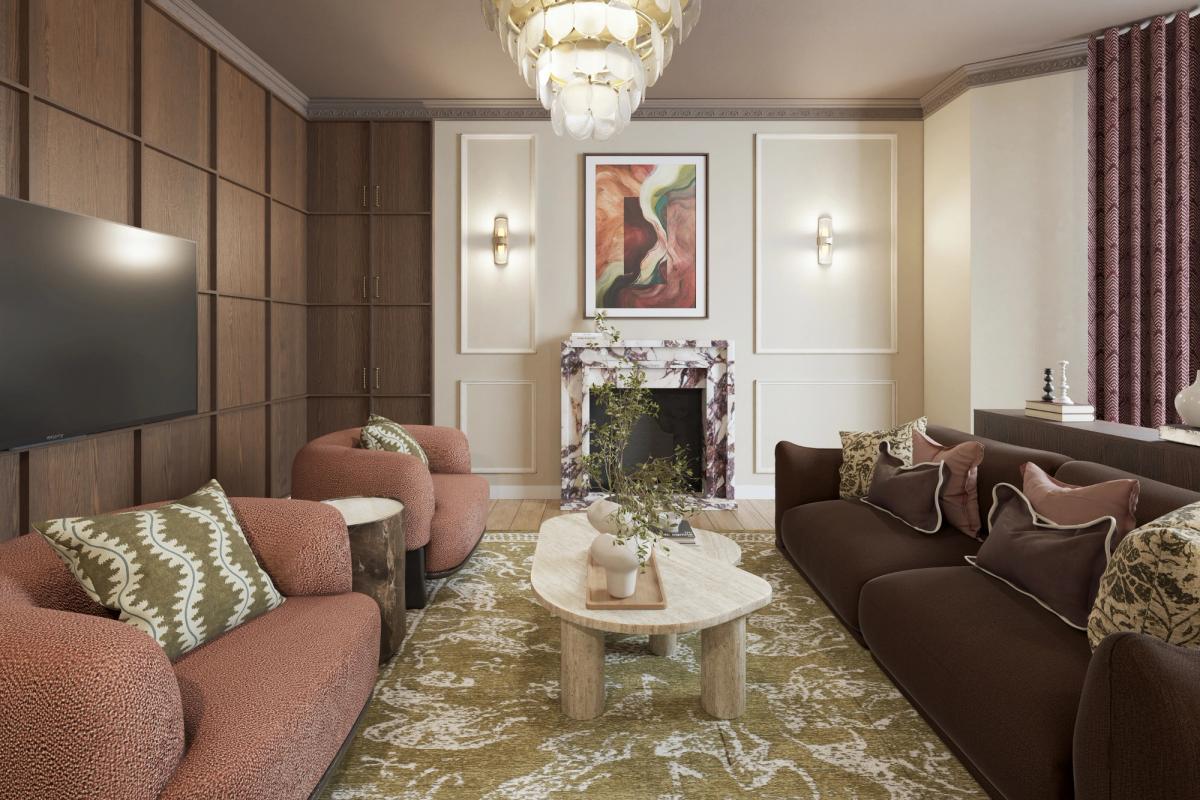
One example from our work is the transitional living room design, where a chocolate-brown sofa and dark timber cabinetry are balanced by warm cream walls, muted pink chairs, an olive rug and a pale stone coffee table.
How to Integrate Brown Into Your Home
Brown can be introduced gradually or used across a full room. Start with the scale of change that suits your space:
Accessories
Start small by layering in throw blankets, cushions, vases, or art objects in brown tones. These pieces add warmth without dominating the room.
Artwork & Lighting
Brown frames, sepia-toned photography, or earthy abstract art can create a focal point. Pair them with warm lighting and brown-toned lampshades.
Furniture
A brown leather sofa or a velvet accent chair adds colour and texture. A wooden coffee table or sideboard can introduce brown through the grain of the material.
Floors & Walls
Brown area rugs or wooden flooring help anchor a room. Paint a feature wall in deep mocha for drama, or stick with soft taupes for subtle warmth.
Balance brown with lighter tones so the room does not feel heavy. Layer different materials to add texture: buttery suede, plush faux fur, bouclé upholstery, and oversized knitted textures. Varying these finishes prevents a single brown palette from looking flat.
Brown can be tested through accessories or used more boldly on a chocolate or mocha feature wall. In either case, combine it with enough light and contrast to keep the room welcoming.