
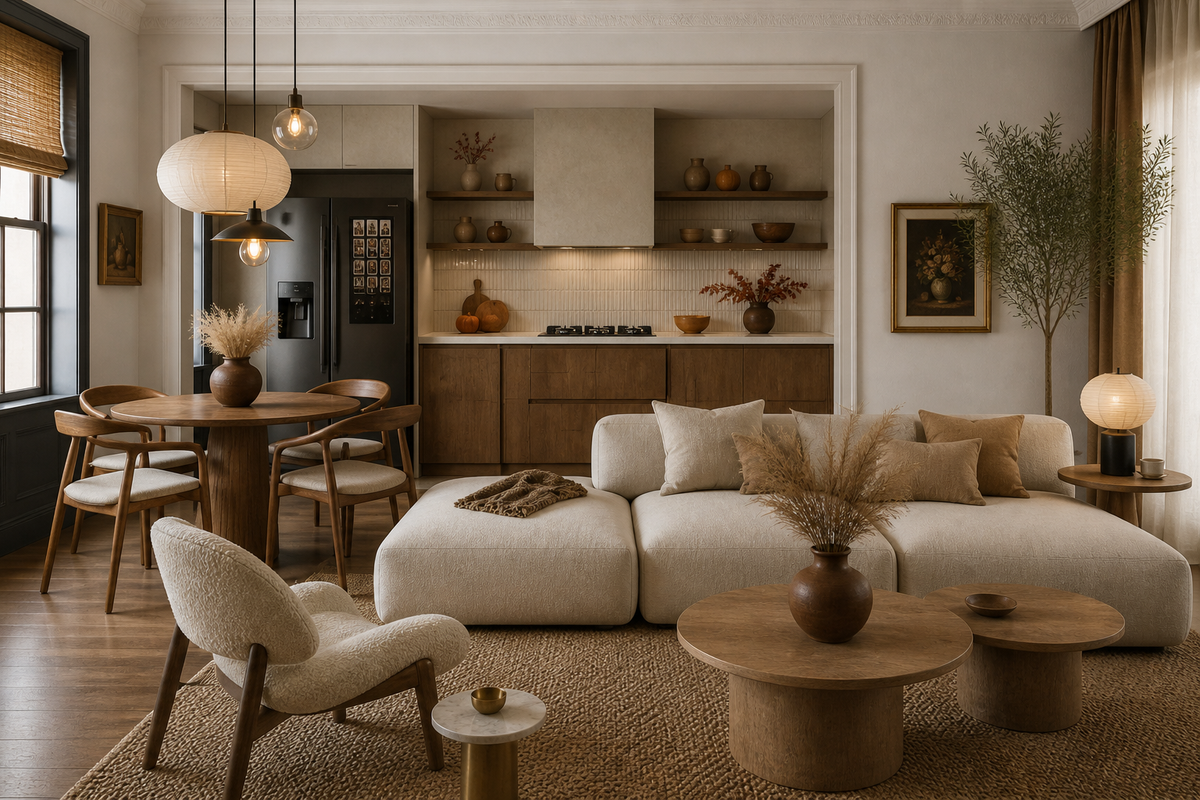
The Japandi aesthetic developed through a cultural exchange that began about 150 years ago, when Scandinavian designers travelled to Japan after its borders reopened. They encountered a similar respect for simplicity, craftsmanship, and natural materials. Over time, these shared principles influenced what is now described as Japandi design.
How Japanese and Scandinavian Styles Intertwine
If you’re familiar with Scandinavian interiors, you’ve probably encountered the concept of “hygge”, the Danish idea of comfort, warmth, and contentment. It treats the home as a cosy refuge. Japanese design also embraces “wabi-sabi,” the appreciation of imperfection and transience: the beauty of objects that are simple, aged, or irregular.
When these two philosophies meet, they create Japandi: an approach that combines minimalism, natural materials, and comfort. Both styles value function and restraint, but Japanese interiors tend to be cleaner and more refined, while Nordic spaces are often more rustic and textured. Warmer Japanese colours can soften the white palettes associated with Scandinavian interiors.
Key Characteristics of Japandi
1. Neutral colour scheme
Japandi interiors use soft, natural colours such as creamy white, beige, taupe, and light browns. Add chocolate, clay, or soft grey for depth. The restrained palette allows materials and textures to stand out.
2. Natural materials
Nature is at the heart of the Japandi philosophy. Use wood, stone, rattan, bamboo, linen, and cotton to add natural texture. Oak floors, bamboo lighting, or walnut furniture bring warmth, while wool and linen add comfort without clutter.
3. Organic shapes and soft furnishings
Balance the clean lines typical of minimalism with accessories that introduce curvature and softness. Rounded pottery, asymmetrical mirrors, and plush cushions soften the structure of modern furniture. Layer throws, rugs, and cushions in different textures to stop a neutral palette from feeling flat. A linen sofa with a wool blanket is a simple example.
4. Handcrafted and ceramic accents
When styling shelves or tables, prioritise handmade pieces that reflect the wabi-sabi principle. Clay vases, ceramic tea sets, or stoneware bowls add texture and visible craft. Choose sustainable or vintage objects where possible, and leave enough space for each piece to be seen.
5. Meaningful statement pieces
Japandi celebrates the intersection of functionality and beauty. Choose a small number of focal pieces, such as a sculptural chair, vase, or artwork, and leave space around them. Curved Scandinavian forms can sit with more angular Japanese silhouettes. Remove pieces that do not serve a purpose.
6. Simple and clean lines
Furniture in this style often sits low to the ground, which makes a room feel more open. Choose simple outlines and well-made pieces. Multi-functional furniture, such as a bench with hidden storage, supports the uncluttered look. Add textured throws or cushions for warmth.
Final Thoughts
Japandi combines restraint, craftsmanship, natural materials, and practical furniture. The result should feel calm and useful, with each object chosen for a clear reason.